
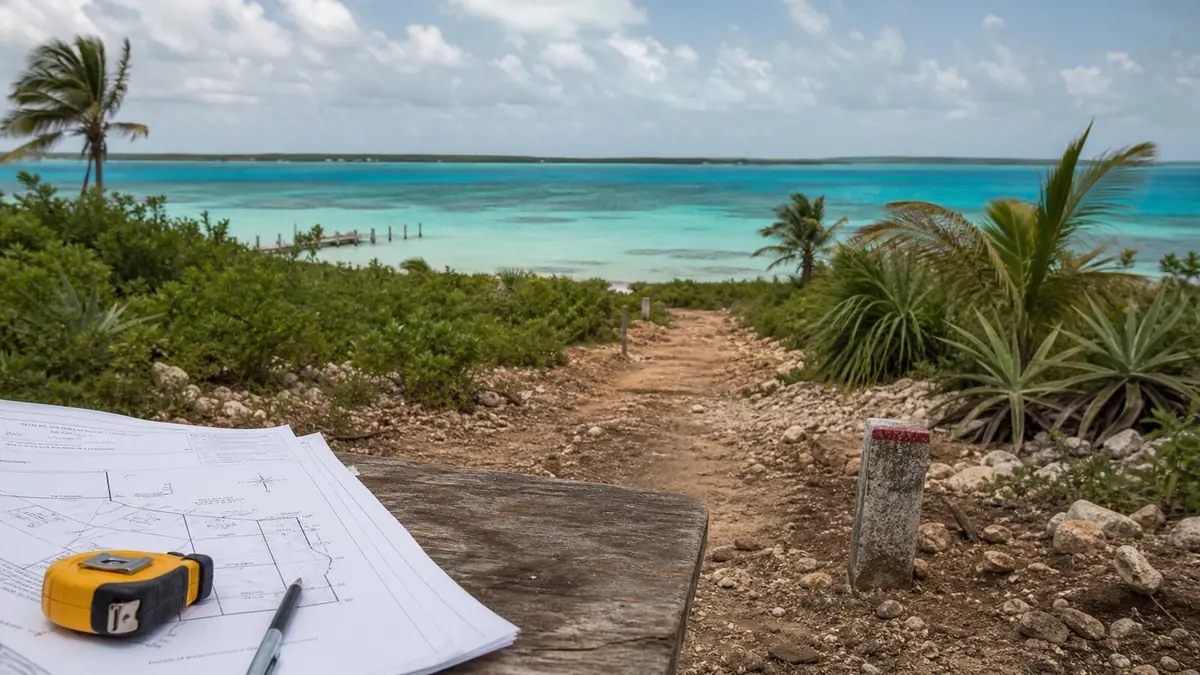
Belize has an obvious pull for foreign property buyers. English is the official language. The country is close to North America, familiar enough to many Canadians, Americans and British buyers, and marketed heavily as an easy Caribbean foothold. Add coastline, islands, inland acreage, warm weather, retirement interest and a legal system with common-law roots, and the attraction does not need much explanation.
That familiar surface can make buying property in Belize as a foreigner look more straightforward than it is. Sometimes the process is fairly clean. The risk is treating legal permission as if it settles the deal. Title, boundaries, access, utilities, closing costs, insurance, storm exposure, property taxes, resale depth and management from abroad all sit behind the pretty listing. The fact that everyone sounds relaxed does not mean the paperwork should be.
Belize is relatively open to foreign ownership, but the real question is not whether a foreigner can buy. The real question is whether this property is properly titled, accurately surveyed, legally accessible, insurable, and affordable to own after closing.
Can Foreigners Buy Property in Belize?
A Canadian, American, British citizen or other non-Belizean buyer can usually purchase freehold titled property in his or her own name. Belize does not have a Mexico-style restricted-zone trust system for foreigners, and a local nominee is not normally required for ordinary titled property.
A Belizean company is not required simply because the buyer is foreign. Some buyers use companies for business, development, liability, estate planning or commercial reasons, but that is a structuring decision, not a basic permission slip. Companies bring their own filings, banking, beneficial-ownership, tax and resale considerations.
Foreign buyers generally acquire property through the same title system, but the form of ownership still needs to be confirmed. Belize's Land Registry records land transactions and guarantees title to registered estates and interests in land. It also records freehold properties and leasehold properties where the lease exceeds seven years. In ordinary terms, the buyer needs to know what title system the property sits in before trusting the sale package.
On the basic ownership question, Belize is comparatively straightforward. That does not replace the duller work of confirming that the specific property is titled, transferable, properly surveyed, free of liens, accessible, insurable and usable.
Property Ownership and Residency Are Separate Questions
Buying a house, condo, island lot or acreage in Belize does not automatically give a foreigner the right to live permanently in Belize. Property ownership is a land question. Residence is an immigration question. They may support the same life plan, but they do not merge.
Belize Immigration describes temporary and permanent residence as separate statuses with their own eligibility, supporting documents and process. The official residence page says Belize offers temporary and permanent residence and notes that the residence process requires approval, including immigration and police interviews.
The Qualified Retirement Program, handled by the Belize Tourism Board, is also separate from ordinary property purchase. BTB says QRP applicants must generally be 40 or older, meet foreign-source retirement-income requirements, pass security clearance and meet annual presence rules. QRP members receive a QRP resident card and may have an easier path to buying land or a home for residential use, but QRP is a retirement-status program, not a deed-based golden visa.
For future Belize residency planning, treat status and property as separate files: qualify for the status first, then decide whether property supports the plan.
How the Buying Process Usually Works
The Belize buying process usually begins with identifying a property, negotiating a price, and signing some form of purchase agreement. By that point, the buyer needs to be thinking less like a visitor and more like a person building a file: who owns it, what title exists, what boundaries are being shown, what costs are unpaid, and what must be settled before any deposit becomes hard to recover.
Independent Belizean counsel is not window dressing. The agent, seller, developer or resort manager may be pleasant, experienced and helpful. They are still not your lawyer. The buyer's lawyer reviews the agreement, conducts or supervises the title search, looks for liens and encumbrances, confirms seller authority, identifies unpaid taxes or charges, reviews the survey and explains the transfer path.
The Belize Natural Resources transfer checklist says a transfer of land application requires the RL1 Transfer of Land form in duplicate, exchange-control permission in certain transactions involving non-resident/resident status, foreign passport or foreign currency, and the original land certificate if one was issued. It also states that stamp duty is payable on any sale, exchange or gift.
After due diligence, the transaction moves toward closing, payment, stamp duty assessment, any required clearances and registration. The transaction is not finished merely because the money has moved. The buyer needs evidence that the transfer has actually been registered.
Belize Property Titles and What Buyers Need to Verify
Belize property title is not a single casual label. The Land Registry page distinguishes declared and undeclared land, registered land under the Registered Land Act, strata titles under the Strata Titles Registration Act, and General Registry Act dealings for land outside compulsory registration areas. It also refers to absolute and provisional titles.
Absolute title is the cleaner concept for most buyers. Provisional title, as described by the Land Registry, involves situations where documents are not produced and long undisturbed possession cannot be proved; the register must note the period of provisional occupation and the condition to which the title is subject.
The title review needs to answer several ordinary but uncomfortable questions. Who is the registered owner? Does the parcel description match the land being shown? Are there mortgages, liens, easements, restrictive covenants, caveats, succession issues, company-authority problems or outstanding taxes? Legal ownership also needs to be separated from possession. Someone may occupy land, improve land, manage land or be locally treated as the owner without holding the clean transferable title a foreign buyer expects.
The seller's or developer's description is not enough. A sea breeze is not a title opinion.
Why the Survey Deserves More Attention Than the Brochure
The survey is where the pretty listing meets measurements. For Belize property due diligence, it should help confirm boundaries, area, access, neighbouring occupation, encroachments, drainage and whether the parcel being sold is the parcel being shown.
Fences, informal roads, old tracks, shared access, landlocked parcels and acreage claims deserve a hard look. A fence may mark habit, not legal boundary. A road may be tolerated, not registered. A parcel may be smaller than advertised.
In rural, coastal and river-adjacent areas, the survey also connects to physical risk. Seasonal flooding, erosion, shifting banks, coastline movement, drainage and nearby occupation can change what the property is worth and how it can be used. Water usually finds its own editor.
Closing Costs When Buying Property in Belize
The biggest closing-cost item is usually stamp duty. Belize's Valuation Unit says stamp duty is assessed on the open-market value of freehold property transactions under the Stamp Duties Act. It describes the transfer tax for foreigners as 8% on land value above BZ$20,000, compared with 5% for Belizeans or qualifying CARICOM nationals. Under the Stamp Duties Act, the duty is calculated using the land value or the sale price, whichever is greater, and is normally paid by the purchaser.
The listing price alone is not enough for a closing budget. The government valuation may matter, and the exemption threshold is in Belize dollars. A 2024 amendment, which took effect on January 1, 2025, changed parts of the exemption and instrument language. The Valuation Unit nevertheless continues to describe the foreign-buyer rate as 8% above the BZ$20,000 exemption threshold.
Other costs may include legal fees, title-search fees, survey costs, registration charges, bank-transfer and foreign-exchange charges, inspection costs, company formation if genuinely needed, and any arrears or charges that must be cleared. Agent commissions may be handled by the seller in many marketed deals, but practices vary and the sale agreement should say who pays what. If a developer quotes "closing costs," ask what the quote actually includes.
A realistic budget begins with the purchase price or assessed open-market value, adds the applicable stamp duty, and then accounts for legal work, searches, surveys, inspections, bank charges and any property-specific arrears. One online percentage is not a budget unless it defines the property value, buyer status, included fees and currency.
Property Taxes and Ongoing Ownership Costs
Belize property taxes are often marketed as low. They may be low compared with Canadian, American or British property taxes, but a low tax bill does not make a property inexpensive to hold.
Local tax treatment depends on location and property type. San Pedro Town Council, for example, says property fees are due April 1 each year and cites the Towns Property Evaluation Act, Chapter 65. Its public page describes rate caps for unoccupied and occupied property using assessed or annual value language. That is a local municipal example, not a nationwide average for every island, town, rural parcel or development.
The more substantial costs often appear after closing: insurance, hurricane coverage, flood exposure, maintenance in a tropical climate, salt-air corrosion, pest control, water and septic systems, backup power, road maintenance, security, caretaking, condominium or development fees, property management, vacancy and travel. Imported building materials and parts can change repair economics quickly.
Can Foreign Buyers Get a Mortgage in Belize?
Financing property in Belize is possible in some cases, but foreign buyers should not assume Canadian, American or British mortgage norms. Belizean banks do offer home and mortgage loans, including products advertised by Atlantic Bank and Heritage Bank, although non-resident eligibility and terms must be confirmed directly.
A foreign buyer may face heavier documentation, lower loan-to-value expectations, higher rates than home-country mortgages, shorter terms, currency questions and collateral requirements. Some deals use seller financing, developer financing or cash. Some buyers finance against assets in their home country and buy in Belize without a Belizean mortgage.
Developer or seller financing deserves careful contract review. Default rules, title-transfer timing, deposit protection, currency, interest changes and assignment rights should be written clearly before the buyer treats the payment schedule as friendly. Easy financing is not automatically cheap financing.
Buying a Condo or Resort Property
Belize real estate for foreigners often includes condos, resort units, managed villas and common-area developments, especially in Ambergris Caye, Placencia and other tourism-facing markets. These can be practical for buyers who want lower day-to-day management, but the paperwork needs more than a glance.
The strata or condominium structure needs to explain monthly fees, reserve funds, special assessments, insurance, common-area ownership, management contracts, rental-pool rules, restrictions on owner use, maintenance standards and the legal status of promised amenities. The financial records deserve more attention than the rendering, especially when the buyer will not be nearby to see how the property is being run.
Resale competition can also be tighter in foreign-buyer developments. If several similar units are for sale at once, or if the developer continues releasing inventory, your exit may compete with the same marketing machine that sold you the unit.
Buying Preconstruction Property
Preconstruction property adds another layer of risk because the buyer is paying before the finished asset exists. That does not make every development suspect. It means the file has to cover the developer's track record, land ownership, approvals, construction permits, escrow arrangements, completion guarantees, cancellation clauses, deposit protection, specification changes, delay provisions, assignment rights and what happens if the project stalls.
Do not confuse construction progress with legal security. A partially built project can still have financing, title, permit, contractor, infrastructure or management problems. Rental-income projections should be treated as marketing until proven by comparable operating history, fee schedules, taxes, insurance, management costs and owner-use rules.
Beachfront, Island and Coastal Property
Buying beachfront property in Belize raises legal, physical and operating questions that inland houses may not. A coastal purchase brings erosion, hurricanes, storm surge, flooding, insurance availability, seawalls, docks, mangroves, public access, protected areas, setbacks, wastewater, electricity, water supply, island transport and construction logistics into the transaction.
Belize's Department of the Environment publishes environmental-clearance resources and service areas covering tourism projects and urbanization, and the Coastal Zone Management Authority and Institute describes its mandate as planned sustainable development in Belize's coastal zone. For a simple resale condo, this may sit in the background. For beachfront land, mangrove areas, docks, seawalls, subdivision, resort use or new construction, environmental and coastal questions belong near the front of the file.
Island property also turns distance into a cost. Materials, labour, utilities, repairs, emergency access and waste disposal can all be harder and more expensive offshore. The boat ride may be lovely. It is also part of the maintenance budget.
Buying Land or Acreage in Belize
Buying land in Belize can appeal to Plan B buyers looking for space, privacy, a small farm, a future build site or a long-term family base. It can also expose weak assumptions faster than a finished house.
Undeveloped or rural land turns basics into live questions: legal access, road condition, electricity, water, wells, septic suitability, drainage, soil, agricultural use, clearing costs, security, caretaking, distance from medical care and supplies, construction logistics and whether promised infrastructure exists. If the listing mentions future roads, future utilities or future subdivision approval, the word "future" is doing a lot of unpaid labour.
Acreage can be sensible when title, access, survey, infrastructure and use are clear. It can be a poor Plan B if the buyer has to solve every basic service from another country. A future standalone Property Watch article on buying acreage in Belize should go deeper into road access, wells, power, security and build logistics.
Where Foreign Buyers Commonly Look
Ambergris Caye is the obvious name in the foreign-buyer conversation: island living, tourism infrastructure, restaurants, rentals and a deeper pool of international attention. That visibility also brings higher pricing, island logistics, storm exposure, insurance questions and competition with other foreign-owned inventory.
Placencia offers a different version of the coastal pitch. It is mainland rather than island, with beach access and resort property on a peninsula, but transport, insurance, coastal exposure and unfinished infrastructure still need to be separated from the sales language.
Hopkins has a smaller coastal feel and a less polished tourism environment, which can be part of the appeal. Resale depth may be thinner, and local land-use questions deserve more attention than they sometimes get in casual conversations. Corozal sits in northern Belize near the Mexican border and has long attracted some retirees looking for a quieter northern base; drainage, services, medical access and resale demand still set the practical limits.
Inland buyers often look toward San Ignacio and the Cayo District for homes, acreage and eco-style property. Belize City and nearby areas offer services, business access and transport links, though neighbourhood variation, security and flooding require a closer read. On mainland rural property, space and lower density are only part of the equation. Title, utilities, access and security become the story very quickly.
The Main Risks Foreign Buyers Should Investigate
The main Belize real estate risks are rarely exotic. They are ordinary property problems made harder by distance, unfamiliar systems and a buyer's desire to believe the easy version.
Defective or unclear title, provisional title, boundary disputes, unpaid taxes, mortgages or liens, lack of legal access, informal occupation, unfinished developments, misleading rental projections, inadequate infrastructure, hurricane or flood exposure, remote management problems, limited resale demand and overpaying in a foreign-buyer market all belong in the file. The same due-diligence thread runs through the whole purchase: registered ownership, current title, liens, taxes, survey accuracy, legal access, working utilities, insurance, annual holding costs, use restrictions and comparable resale history.
Several of these questions are connected. A title search without a survey can miss a boundary problem. A cheap tax bill without insurance and maintenance numbers tells only a small part of the ownership cost. A rental projection without use rules and management fees is mostly theatre.
Questions to Ask Before Making an Offer
Before making an offer, ask for the registered owner's name, title documents, survey, tax status, lease or strata documents, utility evidence, encumbrances, access evidence, insurance availability and a written estimate of closing costs. For coastal or preconstruction property, add environmental constraints, storm history, erosion, approvals, deposit protection and late-delivery terms.
These are not hostile questions. They are normal adult questions in a foreign property transaction. If a seller, agent or developer acts offended because you want the file reviewed before wiring money, that is information.
Buying Property in Belize as a Foreigner: Is It a Sensible Plan B?
Belize can be a sensible Plan B property market for the right buyer. It offers English, warmth, proximity to North America, low-density living in many areas, a range of coastal and inland options, and comparatively open foreign ownership. It is less suitable for buyers who expect Canadian or American financing, fast administration, uniform infrastructure, deep resale liquidity or low-maintenance ownership from thousands of miles away.
Foreigners are generally allowed to buy property in Belize. That is the easy part. The decision turns on whether the particular property has clean title, verified boundaries, legal access, manageable carrying costs and a resale market that exists outside the sales pitch. Belize may be relaxed. Your due-diligence file should not be.
FAQ
Can a foreigner legally own property in Belize?
Yes. Foreigners can generally buy titled property in Belize directly, without residency, a Belizean nominee or a Belizean company. The title, boundaries, encumbrances and transfer path still need independent legal review.
Do I need residency to buy property in Belize?
No. Property ownership and immigration status are separate. Buying property does not by itself grant the right to live permanently in Belize.
How much are closing costs in Belize?
Stamp duty is normally the largest statutory cost for a foreign buyer. Legal fees, searches, surveys, inspections, registration-related charges, bank costs and property-specific arrears must also be added, so one universal closing-cost percentage is not reliable.
Does buying property qualify me for Belize residency?
No. An ordinary property purchase does not automatically grant Belize residency. Residence and QRP status have separate processes and requirements.
Can foreigners get a mortgage in Belize?
Possibly, case by case. Local mortgage products exist, but non-resident eligibility, down payments, terms and rates must be confirmed directly with the lender.
Is Belize property a good investment?
It can be for some buyers, but the result depends on title quality, location, purchase price, infrastructure, carrying costs, rental assumptions and resale depth. No appreciation or return should be assumed from Belize's general appeal.
Is it safe to buy land in Belize?
It can be safe when title, survey, legal access, taxes, boundaries, infrastructure, flood exposure and seller authority are independently verified. Rural, coastal, island and preconstruction land deserve extra review.
Related Exiled Mounty Reading
If Belize is part of a broader Plan B, use to screen the residency side before letting a property deal drive the whole plan. For relocation context, see the Belize Residency Field Guide, the Property Watch hub, and the Canada Exit Guide.
Sources and Further Reading
Educational information only. Not legal, real estate, tax, investment, immigration, financial, or relocation advice. Verify the specific property file with qualified Belize professionals before acting.