
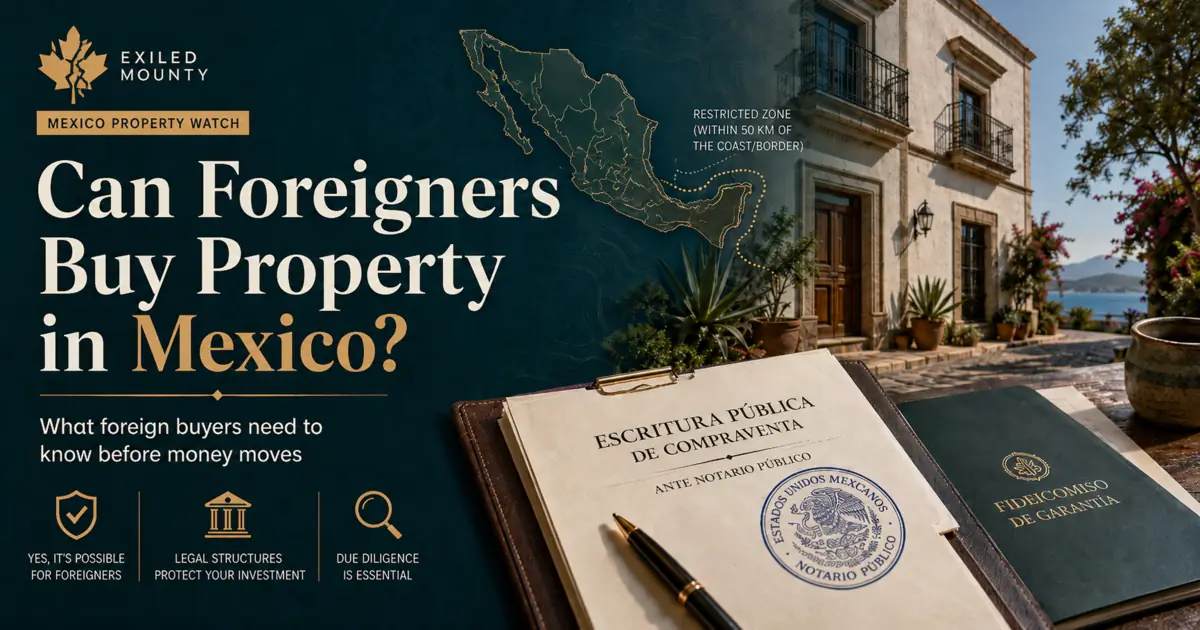
Direct answer: Yes. Foreigners can generally buy private property in Mexico. Outside the restricted zone they may usually hold direct title; residential property within 100 kilometres of a border or 50 kilometres of a coast is commonly held through a bank trust called a fideicomiso. The legal structure is only the first gate—title, land status, liens, seller authority, and closing documents still require independent review.
Mexico is one of the most practical first flags for Canadians and Americans. It is close, familiar enough to scout, and full of cities where a foreigner can rent, buy, and build a normal life. But property is where expat optimism goes to get mugged by paperwork.
The real question is not only whether a foreigner can buy land, but what kind of land it is, where it is located, how title is held, who verifies the file, what the closing structure is, and what risks are hiding behind the listing photos.
Mounty's read: Foreign ownership is possible in Mexico, but it is not casual. Give every property the due diligence it needs. Don't just treat it as a lifestyle purchase.
The Basic Rule
Outside the restricted zone, foreign individuals can generally hold direct title to private property in Mexico, subject to proper legal process and the standard foreigner clauses and permits handled during the transaction.
Inside the restricted zone, foreigners generally do not take direct title to residential property. The restricted zone is commonly described as land within 100 kilometers of an international border or 50 kilometers of the coast. That includes many of the places foreigners actually want: beach towns, border-adjacent markets, and resort areas.
For residential property in that zone, the usual structure is a fideicomiso, a bank trust. A Mexican bank holds legal title as trustee, while the foreign buyer is the beneficiary with rights to use, sell, lease, improve, inherit, or transfer the beneficial interest under the trust terms.
Fideicomiso Is Not A Scam Word
Some newcomers hear "bank trust" and think it means they do not really own anything. That is too simple. A properly created fideicomiso is the normal legal structure for many foreign residential buyers in the restricted zone.
In practical terms, the buyer can usually use, improve, rent, sell, transfer, and leave the beneficial rights to heirs, subject to the trust terms and Mexican law. That is why many foreign buyers use this structure without drama.
But normal does not mean free or risk-free. The trust has setup costs, annual bank fees, permit requirements, successor-beneficiary details, and renewal or transfer issues. Setup fees can run from the low hundreds into the low thousands of U.S. dollars, with ongoing annual bank fees after that. Verify the actual quote, bank, term, renewal rules, and transfer costs before treating the purchase price as the full cost.
You need to understand who the trustee bank is, what the trust says, what rights are granted, how heirs are named, and how the property can be sold later.
Corporations Are Not A Magic Shortcut
You will hear that foreigners can buy through a Mexican corporation. Sometimes a corporation makes sense for legitimate business or commercial use. Sometimes it is pushed because someone wants to force a structure onto a buyer who does not understand the tax, accounting, compliance, and use restrictions.
Do not use a corporation just because an agent says it is easier. Ask a Mexican lawyer and tax professional whether the structure fits the actual use: personal residence, rental property, business operation, land development, or something else.
The Bigger Risk Is Usually Not The Foreigner Rule
Foreign buyers often obsess over the restricted zone while missing more boring risks: whether the seller actually owns the property, whether the boundaries are correct, whether there are liens, inheritance claims, unpaid taxes, utility debts, condominium disputes, construction defects, zoning restrictions, or permit problems.
Unpaid property taxes deserve their own warning. In Mexico, old property-tax debts can surface during a transfer and become an ugly closing surprise. Confirm the predial/tax account status before you rely on the seller's price, timeline, or clean-title story.
Mexico uses notarios in property transfers, but a notario is not your personal attack dog. The notario has a formal legal role in the transaction. You may still want independent counsel reviewing your interests before you sign, wire money, or waive conditions.
Minimum Due-Diligence Questions
Is the seller the registered owner? Are there liens, mortgages, tax debts, inheritance issues, or disputes?
Is it private property, condominium property, rural land, or anything connected to ejido or communal land?
Is a fideicomiso required? Which bank will act as trustee? What are the setup and annual fees?
Water, drainage, road access, internet, electricity, noise, security, and neighborhood trajectory matter after the Instagram spell wears off.
What To Do Before Money Moves
- Confirm whether the property is inside the restricted zone.
- Confirm whether title is private property and registered properly.
- Use a qualified Mexican notario and consider independent legal counsel.
- Get all promised terms in writing, including price, inclusions, deposits, timelines, penalties, and refund conditions.
- Do not rely on "everyone does it this way" as legal advice.
Sources And Verification Points
- Mexican Constitution, Article 27 - restricted-zone basis and land ownership framework: diputados.gob.mx/LeyesBiblio/pdf/CPEUM.pdf
- Secretaria de Relaciones Exteriores consular guidance on acquisition of properties in Mexico - official starting point; verify current page directly if accessible: consulmex.sre.gob.mx
- Public Registry, notario, bank trust, local tax, and municipal permit details should be verified in the state and municipality where the property sits.
Bottom line: Foreigners can buy in Mexico. Smart foreigners slow down, verify the land file, and treat the legal structure as only the first gate.
Educational information only. Not legal, real estate, tax, investment, immigration, or financial advice. Verify with qualified Mexican professionals before acting.